Amidst the Coronavirus crisis, Lee, a research scientist at the Wuhan Institute of Virology, finds a unique way of eradicating the deadly coronavirus. Read more by clicking the following link:
http://www.lulu.com/content/e-book/to-kill-the-coronavirus-lees-binary-theorem/26313066
Wednesday, 18 March 2020

Tuesday, 17 September 2019
How Africa Should Ride the Train of the Fourth Industrial Revolution
How Africa Should Ride the Train of the Fourth Industrial Revolution
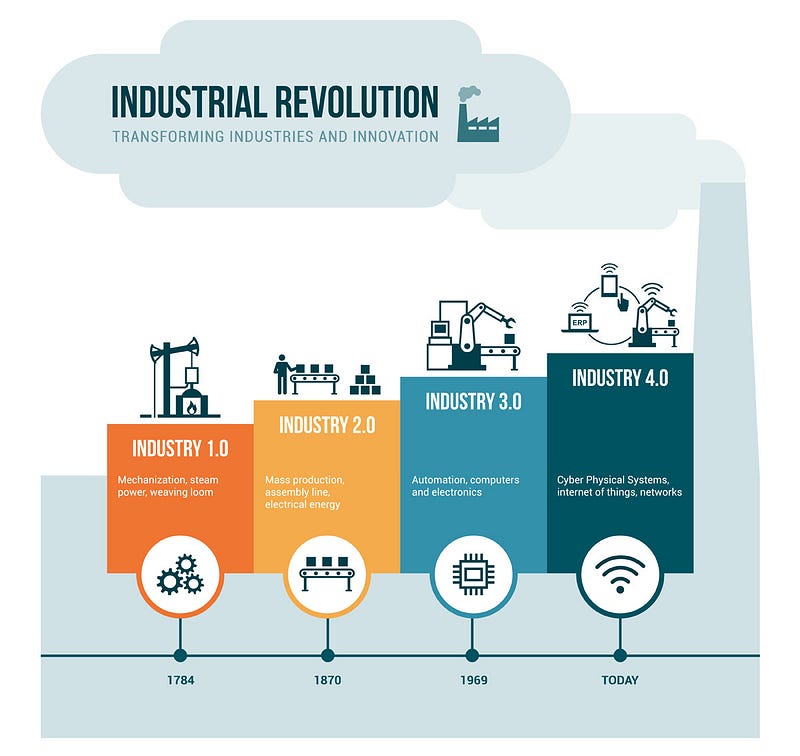
All developed countries successfully passed through all the stages of Industrial Revolutions. Underdeveloped countries in Africa are struggling to make a transition from one stage to another. The Second and Third Industrial Phases heavily relies on availability of electrical power. Mass production of goods in assembly lines requires huge amounts electricity. Beside the energy factor, skills and knowledge are prerequisites of Industry 2.0, Industry 3.0 and Industry 4.0. Most African countries have inadequate supplies of electricity. Technical skills and expert knowledge are scarce in most African countries.
The good news is that Industry 4.0 can be powered by batteries and solar panels. At the heart of the Fourth Industrial Revolution (Industry 4.0) is the Internet. Internet Service Providers (ISPs) have boosters or base stations to facilitate communication among devices like cellphones and computers. In addition, there are satellites in space to enable connectivity of all communication devices in the world in real time. Boosters can be powered with batteries, solar panels or generators. Satellites are powered by solar panels and batteries. Solar panels, batteries and generators are cheap sources of electrical power. As such, ensuring that every person is connected to the internet requires little capital.
Governments, ISPs and big business must roll out free internet access in public places like clinics, courtrooms, libraries, hospitals and learning institutions. Those people who cannot afford a smartphone but are in need of accessing the internet will have to be provided with the devices. For example, unemployed youths. Furthermore, people will need to be trained in new technical skills like coding, artificial intelligence, machine learning, cyber-security, cloud computing, data science and app development. These subjects can be learnt for free on MOOCs (Massive Open Online Courses)portals.
If people can be provided with free internet access and free technical skills, the Fourth Industrial Phase will be attained in a short period of time. Africa has the highest youth population in the world and the highest youth unemployment. It is common knowledge that the youths of these days are technically savvy. Empowering the African youth with technical skills and knowledge may spawn entrepreneurship and the next Silicon Valley. Ideally, that may reduce problems of illegal migration to Europe or South Africa. Crossing the Mediterranean Sea in precarious boats is dangerous. Deportation of illegal immigrants is done in a degrading way. In South Africa, illegal immigrants face deadly xenophobic attacks and harassment. These social problems can be avoided by providing employment opportunities to the African youth.
The article is available on Medium at:
https://t.co/s4zvIF1AoA?amp=1
The article is available on Medium at:
https://t.co/s4zvIF1AoA?amp=1
The Black African Conundrum
The Black African Conundrum
The Black/White racial labels are misleading at most and derogatory at worst. For instance, the word ‘White’ is associated with virtues like purity and holiness. In contrast, the word ‘Black’ is associated with vices like blackmail and black magic. Other phrases associated with the word ‘black’ are black-sheep, black-market and blacklisted. In reality, no one is ‘Black’ or ‘White’ in the true sense of the word black or white. People are a hue of brown colors.
For that reason, Arabs of North Africa are not labeled as ‘Blacks’. Neither are they ‘proudly African’. Similarly, ‘Whites’ permanently residing in Africa cannot be called ‘Blacks’ and they are also unwilling to called Africans. There are Africans who are light in complexion and calling them ‘Blacks’ is a misnomer. The ‘Blacks’ in America are correctly referred to ‘African-Americans’. Indians and Chinese are not ‘Reds’ or ‘Yellows’. They are collectively referred to as Asians.
We have Maoris of New Zealand and Aborigines of Australia. There are Russians and British people of Europe (the so-called ‘Whites’). The point is, its politically correct to label people according to their place of birth rather than their skin complexion. Classifying people or labeling them according to their skin complexion is one of the root causes of racial prejudice and racial intolerance. The negative connotations associated with the ‘Black’ label also instill feelings of inferiority among some Africans. Hence we have sporadic bouts of xenophobic attacks in South Africa.
African women goes to extreme lengths to mimic the ‘White’ standard of beauty. They buy lotion creams to enlighten their skins. They stretch or bleach their hair. Some wear artificial hair like wigs or human hair extensions. All this is done with the ultimate objective of appearing like a ‘White’ woman. Those with the money goes for plastic surgery like the late super-star Michael Jackson. The average ‘Black’ African has a very low self-esteem which emanates from the ‘Black’ label.
Most African parents prefer to give their children English, French or Portuguese names. This is mainly because the former colonizers are still revered by most Africans. The official language of communication is still English, French or Portuguese in most African countries. The colonial language is still the dominant language of teaching and learning. Court proceedings, formal meetings and political rallies are predominantly done in the colonial language.
Major religions in Africa also originated from Europe or Asia. Hence we have the Dutch and Roman Catholic churches. Another vexatious issue of the average ‘Black’ African is on social lifestyle. Newly-wed couples are confounded on whether to have a ‘white wedding’ or ‘traditional wedding’ or both. African traditions and cultures are generally despised as being primitive. The African attire is proudly adorned by people in West and North Africa.
In short, Africans must desist being called ‘Blacks’. They must start emulating their cultures and traditions. Most importantly, the colonial language must be expunged from all learning institutions, business meetings, political rallies or court proceedings. Such changes will not only redress the identity crisis strangling African development, but will go a long way in instilling pride in being African, not being black.
The article is also available on Medium at:
https://t.co/vXlaAcYWPC?amp=1
The article is also available on Medium at:
https://t.co/vXlaAcYWPC?amp=1
The Silver Spoon Connection: The Root Cause of Success and Failure in Life

It is the reality of life that some people are born with a silver spoon in their mouths. Such people generally tend to portray their success in life as a product of sheer hard work. Of course, it is true that some people achieved fame and fortune by working very hard. William Shakespeare aptly summarized how people achieve success in the following words:
“Some are born great, some achieve greatness, and some have greatness thrust upon them”.
There are many books written on the subject of achieving success. For example, Robert Kiyosaki wrote the bestseller entitled ‘Rich Dad, Poor Dad’. Other popular books include ‘Think and Grow Rich’ by Napoleon Hill and ‘The 48 Laws of Power’ by Robert Greene. Daron Acemoglu and James A. Robinson attempted to explain causes of success and failure among nations in their famous book entitled ‘Why Nations Fail: On the Origins of Power, Prosperity and Poverty’.
The Bill and Melinda Gates Foundation recently released a document called ‘2019 Goalkeepers’ Report’. The title of the report is ‘Examining Inequality: How Geography and Gender Stack the Deck for (or Against) You’. In the introduction, Bill Gates and his wife had this to say:
“We were born in a wealthy country to white, well-off parents who lived in thriving communities and were able to send us to excellent schools”.
Causes of Success and Failure in Life
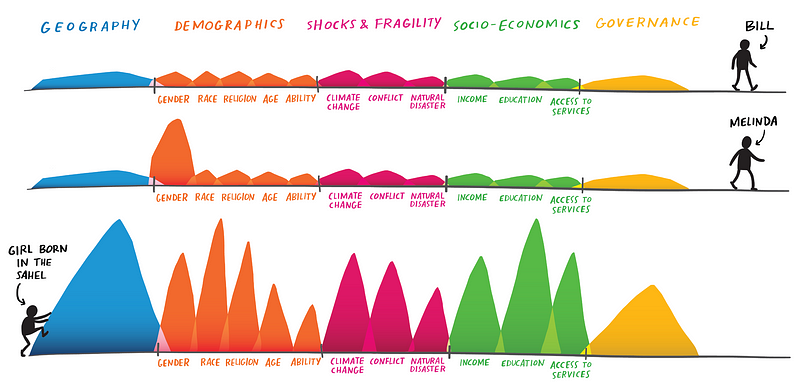
Bill Gates achieved greatness but he is humble and honest enough to acknowledge that part of his success was due to the ‘silver spoon connection’. Other billionaires like President Donald Trump will grudgingly acknowledge that, if at all. The issue of social connections conjures up secretive clubs of rich and powerful individuals. The Bohemian Club, the Bilderberg, the Freemasons and the Illuminati are some of the famous secretive societies patronized by the rich and powerful.
The issue of connections and gate-keeping extends to the world of work. Being the CEO of a blue-chip company has very little bearing with one’s qualifications and experience. It’s mostly to do with your social background — which school, college or university did you attend. Your friends and relatives play a very critical role in landing that coveted job.
India is a country which practices a caste system where members of society are stratified in rigid structures for generations after generations. If you are not part of the ‘silver spoon connection’, you are doomed for life. Cathy O’Nel wrote a fascinating book entitled ‘Weapons of Math Destruction: How Big Data Increases Inequality and Threatens Democracy’. In the book, O’Neil argues that the advent of the Fourth Industrial Revolution as embodied in data science and artificial intelligence has some unsavory tendencies of perpetuating social and economic inequalities.
Universal social and economic equality will be an elusive dream for centuries to come. However, access to quality education, access to health care, and access to the internet may help to bring down the Gini coefficient among the people of this world. The Gini coefficient measures economic disparities among people in a given country. African countries, and South Africa in particular, have the highest economic inequalities in the world.
The article is also available on Medium at:
https://t.co/XsKFOEMu37?amp=1
The article is also available on Medium at:
https://t.co/XsKFOEMu37?amp=1
Wednesday, 24 July 2019
The Mermaid Doctor
The Mermaid Doctor
By
Vincent Dzapasi
They were herding their cattle home
They were thirsty and tired
The cool Blackwater pool beckoned
They couldn’t resist the temptation
The herdboys plunged into the pool
And one of them dived for good
The famed mermaid dived out
And Taku bade his friends goodbye
They ran home to narrate the ordeal
All famed witchdoctors were assembled
And the village elders trooped to the pool
With drums, divine bones and heavy hearts
They sang, danced and ululated
Hoping for the best
Provided no one cried
And the rituals were done correctly
The mermaid would release Taku unharmed
And Taku would be a great healer
The Chief priest went into a trance
And his voice changed
‘Oh revered Makoni, the Great healer!
Your children cries before you
Hear our pleas oh Great priest
Make our son a great medicine man!’
Supplications and divinations continued
Hoping Taku will emerge from the dark pool
It can be two days, two weeks or two months
As long as he came out
With reed growing out at his back
Dressed in traditional regalia
Armed with his bones of divination
Ready to serve his faithful villagers
The Patient Peasant
The Patient Peasant
By
Vincent Dzapasi
Toiling in the soiling soil
From dawn to dusk
For simple ends
From simple means
Trusting the seeds to sprout
After fighting it out
From pestering pests,
Stubborn weeds and animals.
Anticipating Thanksgiving day
Courtesy of the heavens’ waters
The fertility of the soil
And the grace of God.
Admired for their faith
Their patience and perseverance
Simplicity and sincerity
Contentment and selflessness
Unbeknown to sly urbanites
Peasants desire a place in the Sun
To brighten their dreary lives
And to be blessed by the Lord
The African Warrior
The African Warrior
By
Dzapasi Vincent
With a spear in one hand
And a shield in the other
Amidst song, dance and ululation
The mighty warrior is on a warpath
To kill beasts of the jungle
And defeat foes near and far
And conquer lands beyond the horizon
So as to bring pride to the kingdom.
With a pen in one hand
And a book in the other
Amidst the internet traffic
The African youth is on warpath
To acquire ancient and modern knowledge
To defeat illiteracy and poverty
And conquer diseases and petty squabbles
So as to bring pride to the continent.
Migration Merry-Go-Round
Vincent Dzapasi
Stand No. 757 Dwarsloop
Bushbuckridge, 1280
+27797981277
dzapasiv@yahoo.com
Migration Merry-Go-Round
by Vincent Dzapasi
Mustaff and his friends were accosted by the Corps of the Port Captaincies when their overcrowded boat was about 15km into the Italian waters. They were immediately arrested and detained at a refugee camp in San Ferdinando. Their fingerprints and documents were hastily processed. By the second day Mustaff found himself in a military plane heading for Libya.
The hostile reception at Triq al-Matar was akin to a horror movie. Torture, random beatings, rape and murder were a daily occurrence. These crimes were perpetrated by the Misrata militia, even under the watch of UNHCR officials. He was lucky to be sold to humane traffickers for US$2000.
After being resold several times and shuttled around many illegal detention centres, Mustaff eventually found work at a farm outside Tripoli. He worked for six months and saved enough money to enable him to buy a one-way ticket to Johannesburg.
Mustaff quickly connected with other community members from Ethiopia and Somalia in Johannesburg. He was offered work as a shop assitant in a heavily barricaded spaza shop selling groceries. Three weeks later service delivery protests erupted and his spaza shop was ransacked by a marauding mob of xenophobic youths.
Mustaff fled to the nearest police station for sanctuary. The policewoman who was taking statements from him called Home Affairs officials because he didn’t have a work permit. He was taken to Lindela Detention Centre so that he will be deported back to Libya, or Ethiopia if was lucky.
Tuesday, 24 October 2017
The Interview Part 2
PART 2
(After their greetings and small talk, Sibongile launched the session in earnest)
ABS: What’s your strategy on improving other aspects of the Zimbabwean social life – health, politics, religion, standards of living?
PPP: The Progressive People’s Party intends to inherit a welfare state from the National Transition Authority. Savings from an e-government can be used to fund social grants for widows, the elderly, orphans and people living with disabilities. Pensioners must access their moneys without undue delays. Food parcels from NGOs are welcome but honestly speaking a payout in cash makes a whole lot of difference to the lives of these vulnerable people. It gives them choices and a modicum of dignity. Its working wonders in South Africa. It somehow stimulates economic activity. But don’t get me wrong – the intention won’t be that of creating party patronage or dependency syndrome but to alleviate suffering.
ABS: His Excellency, Cde Mugabe was appointed an ambassador of WHO for NCDs but dethroned 2 days down the line due to a global outrage. The health system in the country is in shambles. The elites go overseas for medical attention. How are you going to fix the rot?
PPP: All referral hospitals must be re-stocked with all the necessary drugs and equipment. Money wasted on foreign trips and a bloated cabinet must cater for giving quality health care to the people of this once beautiful country. Remember, with a lean e-government, such savings are possible. Government clinics will also need to be refurbished. Doctors and nurses must be adequately remunerated. Health, like education, should be provided for free.
(Sibongile nods her head)
ABS: Traditional healers, faith healers? We have an avalanche of prophets with huge followings who claim to cure all ailments? Can you somehow capitalise on that?
PPP: Just like we have ZINATHA, religious denominations in the country must be regulated. Faith healers must be registered and their financial records kept for tax purposes. There must be a common code of ethics to be adhered to by all parties concerned to curb unscrupulous practices. We have prophets swindling or fleecing the gullible public of their hard-earned cash. This is a deplorable practice. Men of the cloth are sexually abusing congregants. There are reports of under-age marriages. There are rape cases. All these despicable vices by vicars and prophets must result in de-registration of perpetrators of the crime. Committing crime under the guise of God is unacceptable. Criminal proceedings must be instituted against the so-called-men-of-god if they flout the laws of the country. But if the clergy can heal the people, unite the people, instil good morals, well, that must be encouraged and supported.
ABS: In your social package to the people, what will be the role of traditional leaders?
PPP: Traditional leaders need to be de-politicised through leadership training courses and workshops so that they are able to function well in an e-government. They are free to belong to any party of their choice but they mustn’t misuse their positions to coerce people to vote a particular party. Frog-marching electorates to rallies or threatening citizens must never ever happen in our envisaged new political dispensation. As part of the rebranding exercise, we will design new official traditional attire for our headmen and chiefs. They will have to throw away the ridiculous hats, bangles and trinkets they were given by the colonial regime. Even our judges will also have to discard their wigs. We will revive the old monarchs like the Ndebele Kingdom, the Mutapa Kingdom and the Rozvi Empire as part of our cultural heritage.
Africans need to re-invent themselves. We need to have self-pride, self-respect and self confidence. That is what great luminaries like Steve Biko, Martin Luther King and Malcom X advocated for. We must refuse to be called Blacks. No one is ‘black’ or ‘white’ in the true sense and meaning of those terms. Colour-coding races is very misleading. Furthermore, the word ‘black’ has negative connotations. It reinforces and conjures concepts like the Dark Continent, Dark Ages, black-sheep, black-magic, black-market, blacklisted, blackmail etc etc. In contrast, ‘white’ is associated with chastity, purity or holiness. If there are Blacks of Africa, Whites of Europe, why are there no “Yellows” of China, “Browns” of Asia or “Reds” of Latin America? In short, the black-white narrative is a racial invention whose usage must be discontinued forthwith. The words Nigger, Negro, Kaffir are frowned upon in polite conversation.
Words like chairman and spokesman are now supplanted with chairperson and spokesperson respectively. The words tribe or native is sometimes used to refer to backward local people of Africa or Latin America. Rarely are the terms used to refer to Europeans or North Americans. Ethnic groups in Europe are specified as British, Nordic, Slavic, Irish or Scottish but rarely as native tribes. No wonder Arabs of North Africa cannot be called blacks and people of European descent who were born and bred in Africa are rarely called Africans but Whites! It’s a semantic mess!
We have a judicial process in our local courts conducted in English and an interpreter to translate in vernacular when there is no English person in the court. We have are political leaders speaking English at rallies or press conferences. We have documents and academic books written in English. Our learners are taught in English. Our women aspire to appear English and go to great pains to enlighten their skins, bleach their hair, wear wigs or put artificial hair extensions. It’s so pathetic. Some men always spot clean-shaven heads not out of cleanliness but because they are not proud of their kinky hair. Beside the e-government, we need a language revolution. We need a cultural revolution. We need to rewrite our history. Our children need to be taught about the great civilisations of Africa. We need to glorify our African scientists, inventors and philosophers. We need to take pride in our cultural traditions and beliefs so that we can be proud of ourselves.
ABS: It seems you have everything figured out. Do you have anything else to say on social life come the new dispensation before we can take a break?
PPP: It will be short-sighted of the political leadership to embark on such social transformation without changing where ordinary people live. Mud and thatch houses are out of place in the digital age. We need to put willing rural folks in planned villages where water, electricity, clinics, public transport, wi-fi and other amenities can be provided. That will require abundant supplies of quality cement, rural and urban planners, architects, engineers and artisans to build new rural and urban settlements for the future digital society, powered by strictly green energy supplies.
ABS: Thank you very much for your fascinating insight into the future but I would want us to take a short break and thereafter continue with our discussion.
PPP: My pleasure, Sibongile.
(They shook hands and adjourned)
Sunday, 22 October 2017
The Interview with the Future President of Zimbabwe
PART 1
Typical of politicians who want to portray an image of a hands-on civil servant, Tafadzwa Musekiwa had his shirt sleeves rolled up and the knot of his tie loosened so that he can ventilate his athletic torso of 42 years. A respectful distance away from him sat Sibongile Sibanda from the African Broadcasting Services. Sibongile Sibanda quickly got to her business of the day after their formal greetings and pleasantries.
ABS: After registering your fledgling party, the Progressive People’s Party, you indicated that your party was neither going to contest the forthcoming 2018 presidential elections nor join a plethora of these sprouting political alliances. You did not articulate the rationale behind your strange stance at your press briefing at Progress Towers Hotel. What’s your grand strategy?
PPP: The truth is most leaders in the ruling party and opposition parties are old and tired. This country needs young, progressive-minded individuals to extricate itself from its current mess. We have Macron at of France at 39, Groysman of Ukrain at 39, Ratas of Estonia at 38, Sheikh Al Thani of Qatar at 36, and Kurz of Austria at 31. Not to mention those in their forties and fifties. Mugabe is 93 years. Tsvangirai is 65 years. Mujuru is 62 years. Mnangagwa is 75 years. Sekeramayi 73 years. They are all past their retirement age and out of tune with the current trends of global leaders’ ages in the digital era. Frankly speaking the BVR exercise is good for us to have a credible voters’ roll but is no panacea to our problems. The country needs a National Transitional Authority as a point of departure to prosperity as envisaged by Dr Ibbo Mandaza.
ABS: But sir, the reality on the ground runs counter to your perspectives and aspirations. How do you intend to bring these apparently hostile political elements to buy in to your ideas? There are campaigns, alliances, factionalism and jostling for positions.
PPP: During the GNU there was stability and prosperity. Elections without reforms are doomed to be a replica of previous sham elections. An NTA will replicate the GNU environment, cool political tensions, save resources on campaigns and provide an opportunity to revamp all aspects of our social, economic and political life. It’s a necessary breather.
ABS: In the unlikely event that a NTA legally implemented, what do you propose to be done first to move the country forward?
PPP: There are simple changes which can transform this country for the good of every citizen of this once great country. Given the opportunity I will speedily remove all dubious police roadblocks.
(Sibongile bursts into uncontrollable laughter)
ABS: Is that really a priority?
PPP: Oh yes it is. The security establishment needs to professionalized. Partisan politics must be rooted out. The entire CIO, and the CID and VID to some extent, need to be disbanded. All uniformed forces will have to undergo retraining – they need rebranding with new uniforms and new names. All top brass of the security apparatus above 60 years will be retired as well as their counterparts in the civil service – those in the PSC and in the JSC.
ABS: Won’t that create a dangerous power vacuum?
PPP: I hope not. The economic reforms, political reforms and electoral reforms can only be possible in the absence of a partisan security apparatus. That’s why the NTA is needed to ensure that the laws of the country align with the new Constitution.
ABS: What will be your source of finance to bankroll your reforms?
PPP: Forensic audits, lifestyle audits, land audits will reveal illicit financial outflows, tender irregularities and corruption. Believe me, some of the missing diamond billions are right within our borders. All ill-gotten wealth will be forfeited to the state. Repealing indigenisation laws will definitely attract FDI. All evicted commercial farmers will be given some of their land back or given new lands for starting new farms. Re-engagement with the IFC, IMF, ADB, WB, USA, EU etc etc will definitely guarantee us loans with favourable repayment conditions. It’s not rocket science. It’s pure logic. Our economy doesn’t need a magic wand. It requires common sense from common people.
ABS: You will invite white farmers back?
(Sibongile seems bewildered)
PPP: Of course. Are they not citizens of this country? If ever the NTA can materialise then all is well for the road to Canaan. Whoever imagined that war veterans will rebel against the Old Man? All those who fled their factories and mines due to hyperinflation or political intimidation will be welcomed back home with open arms. We can’t fail to run a population of 16 million people with the right modalities in place.
ABS: How do you intend to revamp the education sector, the health sector, public infrastructure, manufacturing industries, agricultural sector and the service industry?
PPP: All ghost workers will have to do community service of cleaning up our villages, towns and cities.
(Sibongile beams a happy smile)
Ideally, all sectors you identified need to be developed simultaneously. But education and health certainly deserves urgent attention. Generators, solar panels and powerful lithium batteries need to be installed in all schools and clinics without electricity. Computer centres need to be built in all schools. We need to partner with NGOs and the private sector to make this a success.
(Tafadzwa is agitated)
For instance, the Bill and Melinda Gates Foundation can help with computers, tablets and smartboards in such schools. Dangote can help with the cement and bricks. Strive Masiiwa’s Econet Wireless can help with internet connectivity. Elon Musk of Solar City and Giga Factory can help with solar panels and lithium batteries. Mark Zuckerberg of Facebook and Larry Page and Sergey Brin of Google can help with the e-classroom software. Other billionaires like Warren Buffet, Patrice Motsepe, Nicky Oppenheimer, Mike Adenuga, Johann Rupert etc etc can help finance such noble projects.
The Progressive People’s Party wishes to establish an e-government. This will streamline government performance, optimise efficiency, save costs and create new IT jobs. An e-government is a win-win situation. E-learning and e-commerce are definitely new ways of doing things in the digital age. A relevant curriculum for the electronic age needs to be formulated. This implies doing away with our rote-learning paper-education legacy system. We need to copy best practice from countries doing well in education like Finland, Switzerland, Belgium and Singapore.
We also need to introduce mother tongue as a medium of instruction for all subjects. If Afrikaans is being used as a medium of instruction in South Africa, if Bibles are translated in almost every local language under the Sun, if Google can translate the contents of its webpages, if most countries outside Africa are teaching their children in mother tongue in their learning institutions, why can’t Africans instruct their children in vernacular? Why? The products of our education systems are not for British or American export. As such there is no valid reason as to why we continue to use English as the medium of instruction.
(Sibongile nods her head in agreement)
No learner must walk more than 5 km to school. I have seen NGOs who donate bicycles to learners who walk long distances to school. We thank them dearly from the bottom of our hearts. The initiative must be continued, especially in rural areas. Feeding schemes must also be continued in all schools. Every learner must learn on a full stomach, every learner must learn in mother tongue, every learner must have access to a computer and the internet at school, every learner in a government school must learn for free! Poor students must be supplied with amenities like shoes, jerseys/jackets/blazers. Sanitary pads must be freely supplied to girls who cannot afford them.
(Tafadzwa loosens his neck tie further down his heaving chest)
The same principles must apply to tertiary education. It must be free. It must be in vernacular. Meals and accommodation must be provided for free! After graduation former students need only to work in the public sector for a specific duration and pay back loans given to them as stipends. The loan amount due must not include the tuition fees or costs of accommodation and meals.
(Tafadzwa’s voice is a few decibels up)
Practical subjects, extra-curricular activities, the good work ethic of teachers, the dedication of our learners to excel in their learning areas need to be commended and maintained. However, life skills, computer literacy and mathematical literacy must be taught to everyone in high school and tertiary education. All those studying sciences, mathematics, engineering and technology must also study programming as a second major compulsory subject.
The government must identify talented learners in primary schools, secondary schools, colleges and universities. The ultimate goal will be to channel them towards post-graduate studies or specialise in research. For the later, the government need to build research, innovation and development institutions, something akin to the so-called think-tanks.
(Sibongile nods her head)
The NTA needs to be given a chance to initiate some of those changes. That is why the People’s Progressive Party is not going to join the fray of sloganeering, singing, bootlicking, mudslinging, skulduggery, chicanery or fighting for positions on the feeding trough or the gravy train. We want correct modalities and mechanisms to be put in place to enable free and fair elections to be conducted, and the winner to take the country on a trajectory of prosperity and not regression.
ABS: Thank you very much for your insightful discourse but unfortunately we have ran out of time. If circumstances permit we will continue this discussion next time, same time, same venue. Thank you very much once more for your time.
Monday, 2 January 2017
Restoring Normalcy to Zimbabwe
Perspectives on Restoring
Normalcy In Zimbabwe
So much has
been said on the demise of Zimbabwe at the hands of ZANU(pf) that repetition of
the narrative is unwarranted in this article. Suffice to say that cogent
solutions are going to be proffered in the hope and belief that such proposals
and similar ones will rescue Zimbabwe from further sinking in the self-dug
abyss.
The current
waves of civil unrest as characterised by demonstrations and stay-aways are
testimony of the level of people frustrations. Setting riot police on people
demonstrating peacefully and beating them up or arresting them is no solution
at all. The fact that the stay-away was not organised by any political party is
a strong point to take note of going forward in solving Zimbabwe’s problems.
First and
foremost, this writer agrees with all voices calling for the immediate
resignation of R. G Mugabe and ZANU pf. The security sector must be
reformed such that it is apolitical and
professional. The voters roll and electoral body (Zimbabwe Electoral
Commission) must be revamped. All laws and legislations must be aligned with
the new constitution. Retrogressive laws must be repealed. Non-partisan judges,
magistrates and other legal officers must be appointed to the public office.
That’s what is being advocated by all progressive voices in Zimbabwe. It’s true
that the problems of Zimbabwe must be solved by Zimbabweans. In legal parlance,
there is no obligation to assist your neighbour in dire straits. Hence our
neighbours can afford to fold their arms whilst our country burns.
To wait for
2018 elections is stretching the patience and resilience of Zimbabweans to
unbearable limits. The failure of ZANU pf and Mugabe is known the world over.
The reluctance of ZANU pf and Mugabe to relinquish power is also an open
secret. Now the question is : is there a stalemate? Should we wait for 2018?
Will necessary reforms be implemented before the elections? Will ZANU pf
hardliners tow the line towards reform ? Can Zimbabweans come to a round-table
discussion to iron out the problems afflicting the nation ? The answers to some
of these pertinent questions will be offered in the following narrative.
Dismantling
an entrenched dictatorship is no easy task. It needs resolve, persistence,
determination and sacrifices. We still have dictatorial parties in Russia,
China, North Korea, Equatorial Guinea etc etc. However the Zimbabwean case is
totally different altogether. It requires unique solutions. Which
solutions? Here they are : representatives
of political parties, civic groups, NGOs, churches and ordinary citizens must convene
and chart the way forward, say at HICC or National Sports Stadium. No hooligans
or politicking must be tolerated. Conveners must only entertain robust debate
to extricate the country from the sordid social, political and economic morass
hindering progress. We owe it to ourselves, our children and the future
generation. It’s a landmark shot worth trying. While this conference may not
materialise, the following issues should obviously be tabled for discussion and
resolving.
The efforts
of Tajamuka/Sesijikile, #ThisFlag, opposition parties, YARD and recently the
war veterans must be applauded and augmented. The Zimbabwe Lawyers for Human
Rights (ZLHR) representing the arrested protesters must be commended for
exposing police brutality. They must go a step further in instituting legal
proceedings against the police officers and their superiors, even if it means a
private prosecution like the Kereke case so as to send a strong warning that
police brutality is unwarranted in a democratic society. MPs must table a bill
which will seek stiff custodial sentences to law enforcements agents who break
the law. If that cloud of human rights abuse by law enforcement agents is
removed, then people will be in a position to mount a sustainable and
successful demonstration to bring down the evil regime of Mugabe and ZANU pf. It is heart-warming to note the ZLHR are
representing the war veterans and the arrested protesters, former AG Ndebele is
offering to assist the incarcerated liberation war heroes, two constitutional
petitions challenging Mugabe’s fitness are pending in the constitutional court,
and the opposition parties intend to impeach the President on the missing
diamonds billions, the declining economy and corruption ravaging the country.
All these efforts must be pursued with much vigour so as to pile pressure on Mugabe.
Mai Mujuru’s lawsuits against the state’s draconian and insensitive policies
(SI 68 and bond notes) must also be supported and applauded, so is the effort
to shut down the borders.
All the
efforts showing people’s frustration and happiness won’t make Mugabe and his
cohorts relinquish as we all know that
ZANU pf has stone-hearted and thick-headed individuals who are selfish, and
cruel. The proposal by the Platform of Concerned Citizen to form a National
Transitional Authority is the way forward to extricate Zimbabwe from its
deepening social, economic and political crisis. ZANU pf wont agree to a NTA
unless if they are arm-twisted by SADC or AU. Currently this is highly
unlikely. The proponents of the NTA must however mobilise support from all
relevant stakeholders and convene a meeting at a symbolic venue like Great
Zimbabwe (and attend the meeting draped in the national flag!) wherein the
leadership of the NTA must be chosen and most importantly map out the way
forward. The chosen shadow government must then be marketed to the
international community to source the much needed FDI. The NTA idea must be
pursued with vigour and determination as it is the only way to save Zimbabwe
from imminent collapse. 2018 is too far! Even if the government tries to foil
the efforts to formulate and implement the NTA agenda, a virtual e-state must
be formulated.
The tirade
against social media by Supa Mandiwanzira and the rhetoric of combating
cyberwar by General C Chiwenga is confirmation that the government is aware of
the power of ICT. ZANU pf cant be removed through peaceful and valiant actions
like protests, petitions or impeachment. Neither can there be a coup de tat to
unseat ZANU pf. An NTA structured as an e-government is the requisite coup de
grace. A parallel e-state funded through e-commerce must start wooing FDI
rather than wait for 2018 which are must likely to be rigged again unless if
reforms take place. A well-formulated e-government provides an alternative way
to the Zimbabwe political impasse. Through the social media, people must be
made aware of the e-state as temporary measure to restore normalcy to Zimbabwe.
FDI must not start trickling in after 2018 because that’s way too far. Its
needed as of yesterday.
The
original brains behind the NTA must forge ahead with or without Tsvangirai or
Mujuru if the two are having cold feet about working together or if their egos
supersede a call of national duty. Now that the ZANU pf government went ahead
with their ill-fated plans of issuing bond notes, Zimbabwean citizens must be
alarmed indeed. Rather than sitting on our laurels or on the fence, a
pro-active approach being undertaken through demonstrations and court action
must be augmented by other radical solutions.
Relevant stakeholders must take the bull by its horns viz-a-viz pursuing
the issue of using the Rand or plastic money or bitcoin.
Zanu pf
buffoons have vowed not to cede power through a mere X on the ballot paper. The
nutty professor of theoretical politics recently said Zanu pf will never reform
itself out of power. What does this all mean? Evicting the first family from
statehouse and Zanu pf hoodlums from power through a voting process is wishful
thinking. Remember the 2013 elections under Nikuv engineering? What happened in
Norton must not lull people into believing that Rita Makarau, Tobaiwa Mudede
and their cabals will conduct a free, fair and credible election process.
Although we had refreshing news from Equatorial Guinea, the same may not happen
in Mugabe’s courtyard. So what’s the way forward? A parallel e-government.
Believe it or not, ICT is the way to go from now going forward. Traditional
brick-and-mortar government will soon be a thing of the past.
In South
Africa there is a white enclave called Orania where a semi-autonomous territory
runs its affairs independent of the ruling ANC government. Even in Zanu pf
itself there are parallel structures run on factional lines. In other words, to
take Zimbabwe forward may not necessarily need winning an election. It simply
needs programmes, policies and strong institutions to spearhead a paradigm
shift in people’s standards of living. A coup is not a viable option for
Zimbabwe. Neither is a popular revolution akin to the Arab Spring. It’s
tomfoolery to pin our last iota of hope on the much-vaunted 2018 elections. The
euphoria for 2018 will translate into disappointment to most people
anticipating Zanu pf defeat. Currently there is very little political room to
manoeuvre and therefore an urgent need to think out of the box.
Desperate
situations call for novel measures. Just like how Zanu pf hired Nikuv and ilk,
concerned stakeholders must take the cue and hire consultants to set up a
virtual e-government warming the seat for the NTA post 2018 disappointment. There
are people like Strive Masiyiwa and Arthur Mutambara who can render assistance
in the establishment of a virtual e-government. There are Zimbabweans in the
diaspora who need to be enticed to invest their knowledge, skills, time, effort
or expertise in order to change the
status quo the way Jews trooped back to Israel. Now Israel is a formidable
state in the Middle East . Most urban councils are under the MDC so
experimenting the concept must not be much of a challenge. Whether 2018
elections are won by the opposition or not, a shadow e-government will provide
a soft landing to long-suffering Zimbabweans. This concept is worth trying.
There is nothing to lose in implementing it but everything to lose in
complacency and procrastination.
Monday, 26 December 2016
Perspectives on Improving The South African Basic Education
A lot has been said and done regarding the standard and quality of the South African Education systems. There are pockets of excellence to be applauded like the IEB (Independent Examination Board) and areas of improvement in the CAPS/NCS system (Curriculum and Assessment Policy Statement / National Curriculum Statement). This article will primarily focus on the CAPS/NCS shortcomings and how to improve the system as a whole.
I have 14 years of teaching at various secondary schools in Zimbabwe (5 years) and South Africa (9 years). Having been exposed to various education systems and being curious about how the best funded education system in Africa fails to perform as expected, I have come up with the possible solutions outline below.
One aspect in the favour of South Africa's education system is the ability to adapt. After 1994, the Department of Education has changed from OBE (Outcome Based Education) to NSC (National Senior Certificate) and now CAPS. This is a very positive trait to take the education system to new heights. Organisations which can learn and change stand a better chance of success in these turbulent times. The outcry about the quality of the current education performance can be addressed through another change in the education system.
CAPS has just been introduced and from my own experience the system is giving challengesto educators and learners alike. The main challenges to the FET (Further Education and Training) or the GET (General Education and Training) systemic and structural. As far as possible, mother-tongue teaching and learning must be introduced as soon as possible. The current 98% pass rate in the IEB system may be attributed to the language of teaching and learning (which is English and Afrikaans). UNESCO (2010) Institute For Lifelong Learning explores the benefits of mother-tongue learning in Africa in greater detail. Most learners in IEB system use English/Afrikaans as their home language and as their language of teaching/learning. In contrast, learners in the NCS/CAPS systems use vernacular most of the time but are expected to pass their subjects in English. this is a serious problem affecting most African countries in general. For Africa to develop, mother-tongue must be used as much as English/Afrikaans (or French). Most, if not all developed countries use their own languages in all forms of communication and in the teaching/learning systems. Unless if Africa starts using local language, development will take far too long to accomplish. South Africa must learn from how Afrikaners developed their language to its present status. It is sad to hear Africans addressing each other in English in meetings or at rallies. Let alone use the colonial language in public schools!
Prof V Msila wrote a compelling article entitled "Africanising Tertiary Education" in response to UNISA's Vision 2030. However, this must go beyond protesting use of English/Afrikaans at tertiary institutions. After 22 years of self rule, I am yet to see any learning institution built by an African government where the language of teaching or learning is mother-tongue. This is pathetic. in today's world of technology, language translation is fairly simple and cheap. The onus is upon policy-makers to Africanise every written word into the relevant local languages. Hence Prof J Jansen (2015) launched a diatribe in News24 on the mooted introduction of Mandarin in South African schools rather than introducing local languages.
Beside the issue of language, the South African education system is overloaded with irrelevant requirements making it burdensome to learners and teachers. The number of subjects to be studied are unnecessarily too many. Someone intending to study engineering, for example, does not really need 3 years studying 2 languages, Life Orientation or any other non-scientific subject. its a total waste of time. At FET, learners must specialise in the subjects related to their future careers. By so doing they will spend more time preparing for those learning areas. As such, pass rates will certainly improve. Prof P Vale from University of Johannesburg detailed the language problem and impact in South African schools and how mother-tongue instruction can improve the quality of teaching/learning.
The current education system must not be too academically-focused. Practical subjects must be introduced such that those who cannot fit into the sciences, commercial or general stream must be catered for by offering them practical subjects such as building, welding, fashion design, art, music, dance, cookery, etc etc. In many schools the focus is on pass rates and not equipping school-leavers with life skills. Skilled people end up starting their own businesses and thereby create employment for themselves and others.
Another sad feature of South African schools is the lack of proper libraries and laboratories. Subjects of a practical nature should have a laboratory or a workshop. Most practical tasks are not done well, if at all. Hence the high failure rate in subjects requiring practical knowledge. Computer laboratories must be constructed at all schools to equip students with computer skills. The current generation of youths seem to have an aptitude in technology. Introducing computer technology-based subjects will have a positive impact on the education system and the economy in general. In the same vein, new and relevant subjects must be introduced to cater for contemporary needs of society. For example entrepreneurship, business studies, art and design, woodwork, metalwork, agriculture, programming, building and construction, plumbing, electrical/electronic systems, basic engineering etc etc.
The time allocated to Life Orientation must somehow be made available to sporting activities. in my 9 years teaching in South African schools, sporting activities are almost non-existent. The powers that be seem blind to the fact that careers can be made out of sports. The talents of most South African children is never identified or utilised. The government and labour unions must sit down and sort out this sad state of affairs. Sports is time-consuming and there are no examination results to worry about hence it takes a back-bench in the school calendar. Sports is there on paper but the implementation of sporting activities leaves a lot to be desired. Politicians shout hollow about quota systems in sports rather than construct sporting fields in schools. There are very few, if any rural and township schools with sporting fields for rugby, cricket, tennis or swimming. The only sporting fields you will meet are for netball and football and those ones will be poorly maintained.
The construction and maintenance of laboratories, libraries, sporting fields and workshops will boost the quality of the education and also have a positive impact on the economy. Tenders must floated to construct such infrastructure at schools as well as delivering books translated in mother-tongue. Furthermore, other administrative drags like 'moderation' must be eliminated with immediate effect. In my teaching experience, I have come to conclude that the moderation as done in schools add no value to the overall quality of education. It is a total waste of learners and teachers' time. Similarly, the pass requirements need to be revised upwards in the case where learners are specialising in few subjects. if some of the above proposals are implemented, I strongly believe that the quality of education in South African schools will improve
Subscribe to:
Posts (Atom)